Showing posts with label Technology. Show all posts

Recharge your Cell-phones through green way - A new Concept

0 comments
Everyone knows that traditional wall outlet chargers for cell phones and rechargeable electronic devices use phantom power. In other words, even when the device is not plugged in to the charger, if the charger is still plugged in to the wall, it is still using power while you are out doing your thing. Many experts advise unplugging your device chargers when not in use, but this can be inconvenient.

Recharge your Cell-phones through green way


At a minimum, plugging your electronic device chargers into a power strip is a good idea. When you are not charging devices, turn off the power strip to save money on electricity. Better yet, why not unplug once and for all by harnessing the free electricity provided by nature. There are many green ways to power your handheld, rechargeable electronic devices. Here I am going to mention a new device that will recharge our cell phones through green ways.
Recharge your Cell-phones through green way


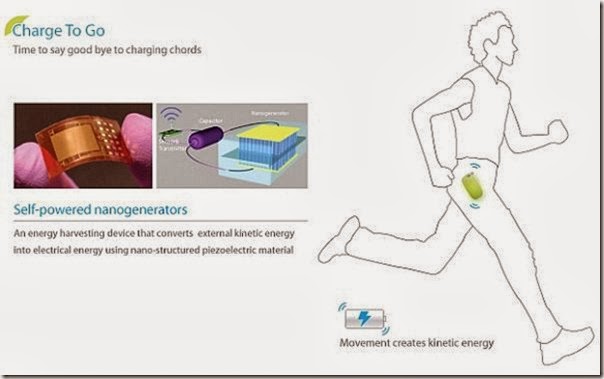
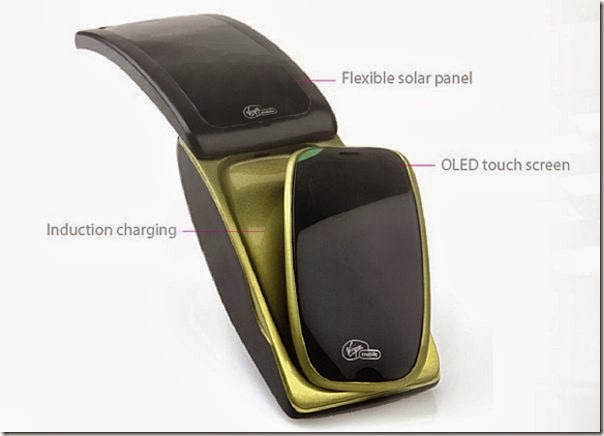
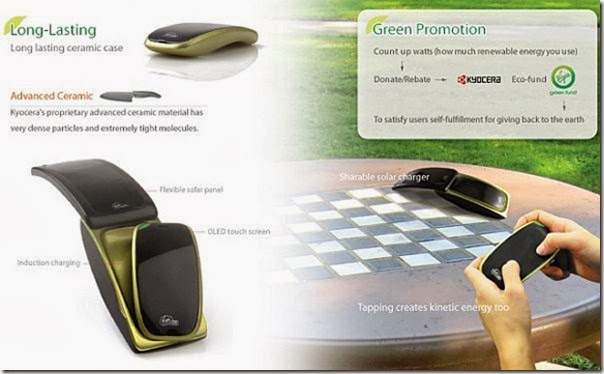
Infinite Mobile Device which allows the cell phone to be recharged via kinetic energy harvested by the movement of the user or by the user’s interaction with the phone like tapping on its screen. It can address the problem of overcharging cellphones.

Recharge your Cell-phones through green way


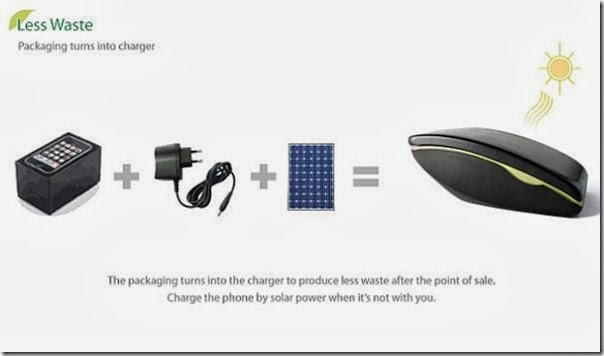
Alternatively, the device can also be powered using solar power with the packaging of the cell phone doubling up as a portable solar charger after the user has extracted their cell phone out of the box it came in. The kinetic and solar energy harvested by the phone and the solar charger can also be shared with other users low on battery power and users can also keep a count of the watts they generate and save during cell phone usage to promote the use of renewable sources of power.
Recharge your Cell-phones through green way

You may also like :::: Smart Phone with 360 Degree Screen

Recharge your Cell-phones through green way


Recharge your Cell-phones through green way

There are many devices yet discovered which are used now a days. I am searching for these devices and hope in week i will post them with their full description. This device is still a concept and hope sooner this concept will convert into its existence. 
Give your feedback and stay tuned to CooL Stack.

Next-Gen Micro Drones with Artificial Compound Insects Eyes

0 comments
Unmanned aerial vehicles (UAVS), also known as drones, are aircraft either controlled by ‘pilots’ from the ground or increasingly, autonomously following a pre-programmed mission. The use of drones has grown quickly in recent years because unlike manned aircraft they can stay aloft for many hours like “Zephyr” a British drone under development has just broken the world record by flying for over 82 hours nonstop. They are much cheaper than military aircraft and they are flown remotely so there is no danger to the flight crew.

Next-Gen Micro Drones with Artificial Compound Insects Eyes

As the camera systems are usually made to work like our eyeballs do thus roboticists are now working on the development of their own versions of compound eyes, which in many ways outstrip the human eyeballs.
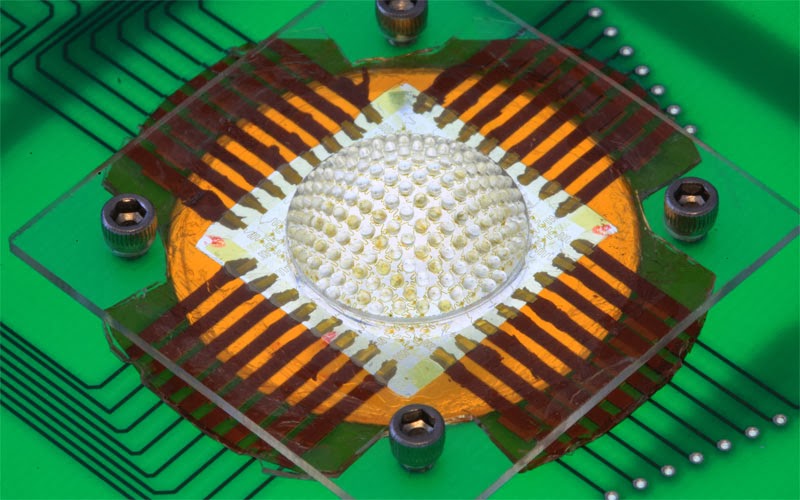
A group of researchers from EPFL in Switzerland has exposed a new artificial compound insect eye. The designed eye is unique because it offers a huge insect-like field of view, very fast performance under all sorts of lighting conditions. It’s mechanically flexible, and so at just 1 mm thin, you can bend it into different shapes. Both the real and artificial eyes offer a horizontal field of view of 180 degrees, and they consist of a similar number of pixels.

Micro Drones
Next-Gen Micro Drones with Artificial Compound Insects Eyes


The advantage of the artificial eye is that it is faster, operating at up to 300 hertz, while a fruit fly only updates at 100 hertz. These aren't the cameras for taking pictures; they’re amazing at sensing movement, or sensing changes in the intensity of light generated by motion. It works indoors, outdoors, in bright sun, and in shade.


Next-Gen Micro Drones with Artificial Compound Insects Eyes
Structure of Artificial Eye-balls
                                
structure of camera
Structure of Camera 

Moreover it has no trouble adapting to rapid transitions between any of these states, which is something that conventional cameras are crummy at. These sensors can bring an array of advantages to robotics, especially to the development of lightweight aerial platforms.


As the military drone manufacturers are also looking for civilian uses for remote sensing drones to expand their markets and this includes the use of drones for domestic surveillance therefore drones will no doubt make possible the dramatic expansion of the surveillance state. With the convergence of other technologies it may even make possible machine recognition of faces, behaviors, and the monitoring of individual conversations. The sky, so to speak, is the limit.
via-IEEE Spectrum


You may also like ::::  How to train your Brain to make Smarter

CooLStack


Smartphone with 360 Degree Screen

0 comments
A smartphone is a mobile phone built on a mobile operating system, with more advanced computing capability and connectivity than a feature phone. The earlier smartphones combined the functions of a personal digital assistant (PDA) with a mobile phone. Later models added the functionality of portable media players, low-end compact digital cameras, pocket video cameras, and GPS navigation units to form one multi-use device. Many modern smartphones also include high-resolution touchscreens and web browsers that display standard web pages as well as mobile-optimized sites. High-speed data access is provided by Wi-Fi and mobile broadband. In recent years, the rapid development of mobile app markets and of mobile commerce have been drivers of smartphone adoption.
One of the key weaknesses of modern smartphones is the small technical limitation, the manufacturers cannot get rid of the frame on either side of the screen. Every year it is getting thinner, but the displays are still not learned, how to bend the edges.

Smartphone with 360 degree screen
Smartphone with 360 Degree Screen

You may also like ::: Top 10 Best Smartphones in 2013


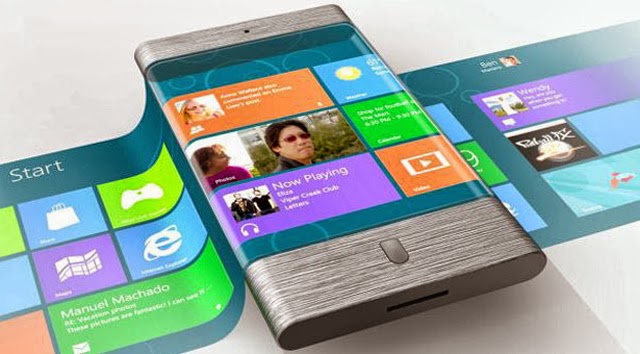
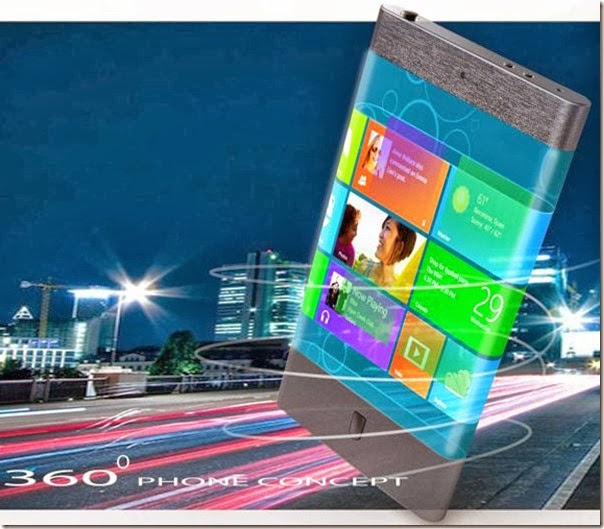
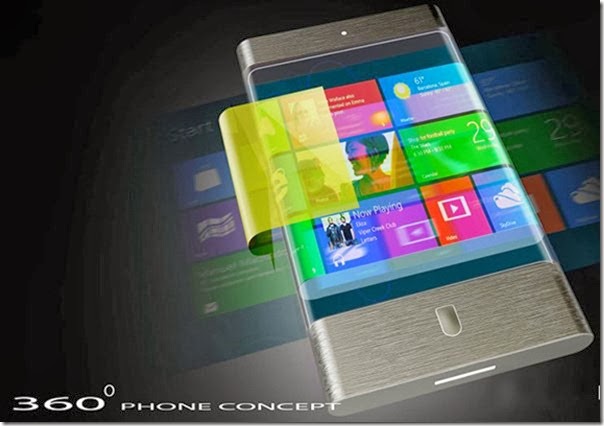
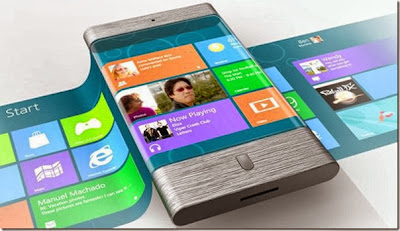
Kent Dechjun, a designer, introduced the concept of a smartphone screen which goes around the body at 360 degrees. Likewise, the author insists on the ability to display three-dimensional image without glasses. As the Windows Phone software platform was chosen because of the brightest and most aesthetic of all.

Smartphone with 360 degree screen- a new idea
Smartphone with 360 degree screen


You may also like :::  Hard Drive with Display Screen


The full 360 degree display is also transparent, so the “live tiles” Metro UI scrolled on the perimeter. It is a new word in the language of a user space. This idea will certainly take advantage of developers and other popular mobile OS. Specifications smartphone to be announced, not even alleged Set manufacturer, but these details do not play a special role, beauty and convenience is much more important. The screen size in this case is defined quite differently. 

Smartphone with 360 degree screen

The way world growing so rapidly and innovations are happened, the time is so close to use such amazing devices. The current are also very astonishing but this 360 degree smartphone with create a big difference in the industry and might cause the changes not only in smartphones but also in other such devices.

Smartphone with 360 degree screen


Do share if you like this new smartphone. Give us feedback and for more such innovative and informative cool things stay tunes to CooLStack daily.

ASUS Google Nexus 7 (2013) - Full Specifications

0 comments
At a first glance, the new ASUS Google Nexus 7 appears to be everything a tablet sequel is supposed to be. It is thinner, lighter, more powerful, and better put together. It comes with a new Android version of 4.3 Jelly Bean.


The first generation of the compact slate having established the Nexus 7 brand as the most popular Android tablet available on the market, it is up to the newcomer to hoist it even further and influence potential users away from the Apple, iPad Mini and Amazon's Kindle HD.


It boasts a powerful quad-core Qualcomm Snapdragon S4Pro CPU clocking it at 1.5GHz, 2GB of RAM, 3950 mAh battery, and a stunning, crystal clear 7-inch HD IPS display with a 1920 x 1200 resolution. Its slim and simple design makes it easy to grasp in one hand.


The latest version of Android includes quite a few notable features such as OpenGL ES 3.0 support and Bluetooth Smart as well as Multi-User Restricted Profiles. The latter enables you to limit access to other users only to the apps you deem acceptable as well as deny them access to the Google Play store. OpenGL ES 3.0 generally improves graphics performance, while Bluetooth Smart provides the ability to connect to the newest generation of Bluetooth devices, such as smart watches etc.


With the Google Play store you will have access to thousands of Android apps, while the Google Play Games will give you access to your favorite games.

Specifications

  • System: Android 4.3 Jelly Bean
  • Processor: 1.5 GHz / Quad Core / Qualcomm Snapdragon S4Pro
  • Memory: Internal: 16 GB / RAM: 2 GB
  • Display: 7.0" / 1080p HD IPS / Resolution: 1920 x 1200 pixels / 323 ppi
  • Dimensions: 114 x 200 x 8.65 mm
  • Camera: 5 Mpixels / auto focus / Video: 1080p HD / Front: 1.2 Mpixels
  • Wireless: Bluetooth: 4.0 / Wifi: IEEE 802.11 a/b/g/n / NFC
  • Connection: Jack 3.5 mm / micro USB
  • GPS: a-GPS
  • Sensors: Accelerometer, Ambient Light Sensor, E-compass, Gyroscope
  • Battery: 3950 mAh
  • Weight: 290g

Google Nexus 7 (2012)- Full Specification

0 comments
A stunning 7" display, powerful quad-core processor and up to 8 hours of battery life during active use. The Nexus 7 was built to bring you the best of Google in a slim, portable package that fits perfectly in your hand.


Google Nexus 7 was built for Google Play. With Google Play, all the entertainment you love is right in your hand which includes more than 600,000 apps and games, thousands of movies, lots of E Books, songs, and an emergent selection of TV shows and magazines.


Google Nexus 7 comes with all your favorite Google Apps like G mail, Chrome, Google+ and YouTube - putting the best of Google in the palm of your hand. Easy to use apps stay in synchronize automatically across your tablet, phone and PC. It also provides tons of free cloud storage and features you will find no-where else.


 Specifications

  • System: Android 4.2 Jelly Bean
  • Processor: 1.2 GHz / Quad Core / Nvidia Tegra 3 / Cortex-A9
  • Memory: Internal: 16 GB / RAM: 1 GB
  • Display: 7.0" / IPS / Resolution: 1280 x 800 pixels / 215 ppi
  • Dimensions: 198.5 x 120 x 10.45 mm
  • Camera: 1.2 Mpixels / Video: 720p
  • Wireless: Bluetooth: Yes / Wifi: IEEE 802.11 b/g/n / NFC
  • Connection: Jack 3.5 mm / micro USB
  • GPS: Yes 
  • Sensors: Accelerometer, Gyroscope, Magnetometer
  • Battery: 4325 mAh
  • Weight: 340

Facebook works to Increase the Traffic

0 comments
Facebook works to Increase the Trafic


Facebook announced its intentions to deliver Internet access to the farthest regions of the world. The CEO, Mark Zuckerberg, dispatched a blog explaining the ethical points of connecting the world, but made few comments about how the technology behind this exertion would look. Recently Facebook has released a 70-page white paper which explains how the social networking giant has been able to scale its website to handle the immense amounts of traffic from the more than one billion customers per day.

Together with Ericson, Nokia, Opera, Qualcomm,Samsung, MediaTek and Facebook launched the league Internet.org. The Open Compute Project, defined by the group, has made the power and water usage of its data centers widespread open to the public.


Facebook works to Increase the Trafic


In a n online paper it is said that, “Many of the technologies we outline in this paper have been released as open source software for the community to use and improve,”


“At Facebook, we are building solutions to unprecedented scaling and connectivity challenges that other companies will start to experience as more people from diverse geographies, network connections and devices share more types of content and make new connections,”


Facebook works to Increase the Trafic


Facebook also claims its users share over 4 billion items on the site every day. These items include comments, photos, pictures, updates and more. Users click on Facebook “Like” button more than 4 billion times each day and send messages to each other 10 million times daily. All this traffic needs some crafty thinking when it comes to serving up this data to its users on desktops and mobile devices.

This kind of functionality is important for a project as large as the one Internet.org is looking to take on. The challenges of connecting some five billion people to the Internet is making sure servers can not only run efficiently but scale to handle larger amounts of traffic than they are currently inured to dealing with. The federation also plans to discover ways to make the Internet less data intensive so mobile users will not face huge charges regarding internet.

Facebook works to Increase the Trafic


Facebook also discusses the work of Ericsson and Qualcomm in the paper. The two companies are said to have put network technologies in place which will make the wireless Internet efficient as well as secure to manage the giant load. 

Samsung Galaxy s5 with Metal Body - Full Specifications

0 comments
Samsung Galaaxy s5 in Hd


After the launch of the Galaxy S4, reports have already begun circulating that its successor, the Galaxy S5, with metal construction for the first time on any Galaxy smartphone. The move to aluminum from plastic is tough to be part of Samsung’s ‘Design 3.0’ initiative to make its hero devices more competitive in physical attractiveness as much as software innovations.

It’s believed that Samsung is starting to feel the heat from rival devices such as the HTC One, the Sony Xperia Z and the iPhone 5, all of which use aluminum and/or glass and are widely seen as more premium or ‘classy’ than the Galaxy range.


According to Android Geeks, who were reportedly tipped by “a trusted source close to the South Korean phone maker”, Samsung will start to use aluminium on its future high-end smartphones and the next Galaxy flagship is highly likely to be the first to benefit from a sturdier, uni-body design.


Of course, a uni-body design has its drawbacks, namely the inability to remove the battery, which is bound to affect travelers and heavy users. Also, all of this could be simply conjecture, as Samsung itself said not very long ago that using plastic is what allows it to produce its handsets in the speed and volume required to meet demand.


Specifications:


This phone may be featuring a 2GHz octa-core processor. In terms of the memory, Samsung is really reflexing it up a notch boosting the RAM to 4GB, which never seen before on a smartphone.
S5 will be available with a five inch screen, more specifically it will be 5.2 inches offering easier navigation. This device will also feature a 'Smart Eye Tracking' software also possibly to improve navigation. Back to the screen, this will be a mutli-touch capacitive touch screen as usual with a resolution of 720 x 1280 pixels.
Furthermore is equipped with the accelerometer, light sensor,gyroscope, and proximity sensor. It contains a 16MP back and 5MP front camera. Although the Galaxy S4 already features a 16MP camera, it's still top of the line industry level where no other phone comes close to delivering. Once again, Samsung has a way of delivering compromised quality.